
Introduction
The digital landscape in India is transforming faster than ever before. Over 60% of all Google searches in 2026 now result in zero-click answers from AI Overviews. Meanwhile, voice search adoption is growing 45% year-over-year, and regional language searches are reshaping how Indians discover businesses online.
If your SEO strategy hasn't adapted to these changes, you're losing visibility, traffic, and leads to competitors who have.
In 2026, search engine optimization is no longer about keywords and backlinks alone. Success depends on understanding how artificial intelligence systems interpret content, how voice assistants rank results, and how regional language searches are creating entirely new market opportunities for forward-thinking businesses.
This comprehensive guide covers the latest SEO trends in India that you need to implement today to rank on page 1, appear in AI Overviews, and attract qualified customers. Whether you're a digital marketer, business owner, or SEO professional, this strategy will help you stay ahead of the competition.
Why SEO Trends in India Are Changing Faster Than Ever
India's digital market is fundamentally different from Western markets. With 95% of searches happening on mobile devices and a growing preference for content in native languages, Indian SEO professionals face unique challenges and unprecedented opportunities.
The Mobile-First Revolution
India is a mobile-first market. Over 450 million Indians access the internet primarily through smartphones. This mobile-centric behavior has transformed everything from keyword research to content structure to page speed optimization.
Traditional desktop-focused SEO strategies no longer work. Today's optimization must prioritize mobile user experience above all else. Google's mobile-first indexing means your site's mobile version is the primary version that Google crawls and ranks.
AI-Powered Search Disruption
Google AI Overviews now appear in more than 50% of all searches. These AI-generated answers appear at the top of the search results, sometimes providing complete answers without users ever clicking through to your website.
For businesses, this creates a paradox: you can rank in position 1 and still lose visibility if your site isn't optimized for AI Overviews. The question is no longer "How do I rank?" but "How do I get cited in AI Overviews?"
Voice Search Growth in Regional Markets
Voice search adoption in India has exploded. Smart speaker usage, voice assistant integration in mobile phones, and hands-free search convenience during multitasking have made voice search mainstream.
When people speak searches instead of typing, they use different language patterns. They ask complete questions. They use conversational phrases. They search with local intent "near me" queries are increasingly voice-based.
Regional Language Emergence
Here's the biggest opportunity many businesses miss: 80% of Indian internet users prefer content in their native language, yet only 20% of quality online content is available in regional languages.
Hindi, Tamil, Telugu, Marathi, Bengali, and Kannada searches are growing 50-80% annually. Businesses that localize content for these languages are capturing customers before competitors even know the opportunity exists.
Master AI Overviews: The New Ranking Factor for 2026
What Are Google AI Overviews and Why They Matter
Google AI Overviews are AI-generated summaries that appear at the top of search results. Instead of showing a list of ranked links, Google shows users a direct answer synthesized from multiple sources.
The key insight: appearing in an AI Overview is no longer a bonus it's essential for visibility.
Here's why: Users get the information they need directly in the search results. Many close the tab without visiting any website. This is the "zero-click" problem that's reshaping digital strategy in 2026.
Over 60% of all Google searches now result in zero-click impressions. If your site isn't optimized to appear in the AI Overview, you're getting zero traffic from those searches.
How AI Overviews Change Your SEO Strategy
Traditional SEO focused on ranking position. You optimized to be #1 and hoped for clicks. AI Overviews demand a different approach.
First principle: Content clarity.
AI systems are pattern-matching machines. They evaluate thousands of websites looking for the clearest, most direct answer to the user's query. Vague, promotional, or indirect content gets filtered out.
Your content must answer the question immediately. No introductions. No marketing fluff. Just the answer.
Second principle: Structure matters more than length.
AI systems need to understand your content's structure to extract relevant passages. Clear headings, bullet points, numbered lists, and well-formatted answers are crucial.
A 3,000-word article with poor structure will lose to a 1,500-word article with excellent structure every time.
Third principle: Multiple angles on one topic.
AI Overviews often cite multiple sources. If you provide just one perspective, you might not get selected. Comprehensive content that covers multiple angles benefits AND challenges, expert opinions AND counterarguments ranks better.
How to Optimize Your Content for AI Overviews
1. Create "Ready-Made Answer" Blocks
Start your article with a direct answer to the main question. Don't bury the answer deep in the article.
Example structure:
Q: What are the latest SEO trends in India 2026?
A: [Direct 1-2 sentence answer]
[Additional explanation and detail follow]
2. Use Clear Heading Hierarchies
H1 for the main topic. H2 for major subtopics. H3 for specific points. AI systems use these hierarchies to understand content organization.
Never skip levels (don't jump from H1 to H3). Use logical, descriptive headings that answer specific questions.
3. Implement FAQ Schema Markup
FAQ schema helps Google understand your question-answer content. It's one of the most powerful signals for AI Overview inclusion.
Include 10-15 frequently asked questions relevant to your topic. Each question should have a clear, direct answer (1-2 sentences minimum).
4. Use Lists Instead of Paragraphs
When you have multiple points to make, use bullet points or numbered lists. AI systems extract and cite list items more easily than flowing paragraph text.
Best practices for voice search optimization:
- Focus on long-tail keywords
- Write in conversational language
- Create comprehensive FAQ sections
- Optimize for local search
- Improve page loading speed
AI systems can extract and synthesize list items quickly. This increases citation probability.
5. Provide Direct Answers Without Marketing Language
Avoid promotional tone. Avoid phrases like "Our service helps you..." or "We believe you should..."
State facts. Provide data. Answer the question neutrally. Authority comes from clarity, not persuasion.
Tracking Your AI Overview Performance
Manual Testing Monthly:
- Search your primary keyword on Google, Perplexity, ChatGPT, and Google Gemini
- Document whether your site appears in the AI Overview
- Screenshot the results
- Note how your content is characterized
- Compare with competitor appearances
Automated Tracking:
- Monitor Search Console for impressions vs clicks. Declining CTR with stable impressions suggests your content is appearing in AI Overviews.
- Set up GA4 tracking for ChatGPT and Perplexity referral traffic
- Create a simple monthly dashboard tracking mentions across platforms
Voice Search Optimization: Adapting for Conversational Queries
Why Voice Search Is Critical in India
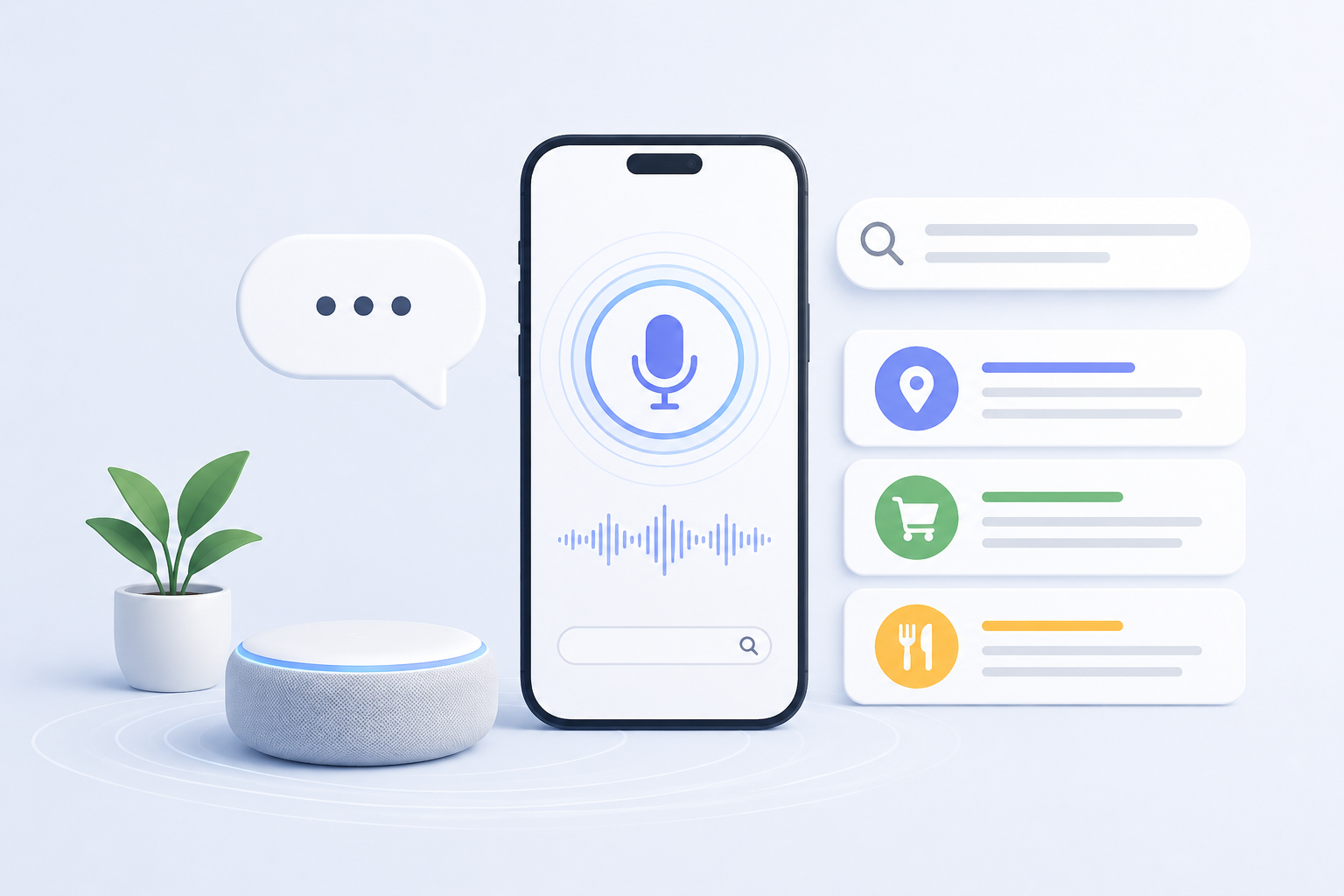
An estimated 50% of all searches are now voice-based globally. In India, the percentage is even higher in metro cities like Delhi, Mumbai, Bengaluru, and Hyderabad.
Voice search adoption is driven by:
- Mobile-first usage (hands-free convenience while multitasking)
- Smart speaker penetration (Google Home, Alexa)
- Regional language support in voice assistants
- Lower data consumption for voice vs. text
- Accessibility benefits for non-English speakers
How Voice Searches Differ From Typed Searches
The fundamental difference: Voice searches are conversational.
Typed Search: "SEO services Delhi" Voice Search: "Which SEO service in Delhi can help my business grow without spending too much?"
Notice the difference? Voice searches are longer, more specific, and naturally question-based.
When people type, they use keywords. When people speak, they use complete sentences with proper grammar. They ask "how," "what," "where," "why," and "which" questions.
Voice Search Keyword Strategy
Target Long-Tail Keywords (5+ words):
- "How can I improve my local SEO for small businesses?"
- "What are the best SEO practices for ecommerce in 2026?"
- "Which SEO tools work best for regional language optimization?"
Focus on Question-Based Phrases:
- "How to" queries: "How to optimize content for voice search"
- "What is" queries: "What is semantic SEO and why it matters"
- "Where" queries: "Where to find local SEO services in India"
- "Why" queries: "Why are Core Web Vitals important for ranking"
Target "Near Me" Local Intent:
- Voice searchers often use location qualifiers
- "Best digital marketing agency near me"
- "SEO services near Bangalore"
- Optimize for both broad and location-specific queries
7 Voice Search SEO Best Practices
1. Create Comprehensive FAQ Sections
Voice assistants are pattern-matching systems designed to find answer to specific questions. FAQ sections are gold for voice search optimization.
Your FAQ should cover:
- Questions your target audience actually asks
- Common misconceptions and how to correct them
- Practical implementation questions
- Comparison questions (our service vs. competitors)
- Pricing and package questions
2. Write in Natural, Conversational Language
Pretend you're explaining your topic to a friend. Use contractions. Use simple sentences. Avoid jargon unless necessary.
Voice search algorithms evaluate content naturalness. Conversational content ranks better than robotic, keyword-stuffed content.
3. Focus on Long-Tail Keywords
Short keywords are dying in voice search. Voice search is all about long-tail, specific queries.
Instead of targeting "SEO trends," target:
- "What are the newest SEO trends for Indian businesses in 2026?"
- "How do AI Overviews affect my SEO ranking strategy?"
- "Which SEO trends are most important for voice search optimization?"
4. Optimize for Local Search Intent
55% of voice searches include local intent. If you serve a specific geographic area, optimize for local search aggressively.
Create location-specific pages. Optimize your Google Business Profile. Build local citations. Encourage customer reviews.
5. Improve Page Speed Significantly
Voice search assistants favor fast-loading websites. If your page loads slowly, it won't appear in voice results.
Target: Under 2.5 seconds for Largest Contentful Paint (LCP). Under 100ms for First Input Delay (FID).
6. Implement Schema Markup for Voice Recognition
Schema markup helps voice assistants understand your content. Implement:
- FAQ Schema
- HowTo Schema
- Organization Schema
- LocalBusiness Schema
- BreadcrumbList Schema
7. Test and Monitor Voice Search Performance
Use voice search testing tools to identify opportunities:
- Test queries using Google Assistant, Alexa, and Siri
- Note which queries show your site
- Identify gaps where competitors appear but you don't
- Optimize content for missed opportunities
Core Web Vitals 2026: Why Page Speed Still Matters for SEO
What Are Core Web Vitals?
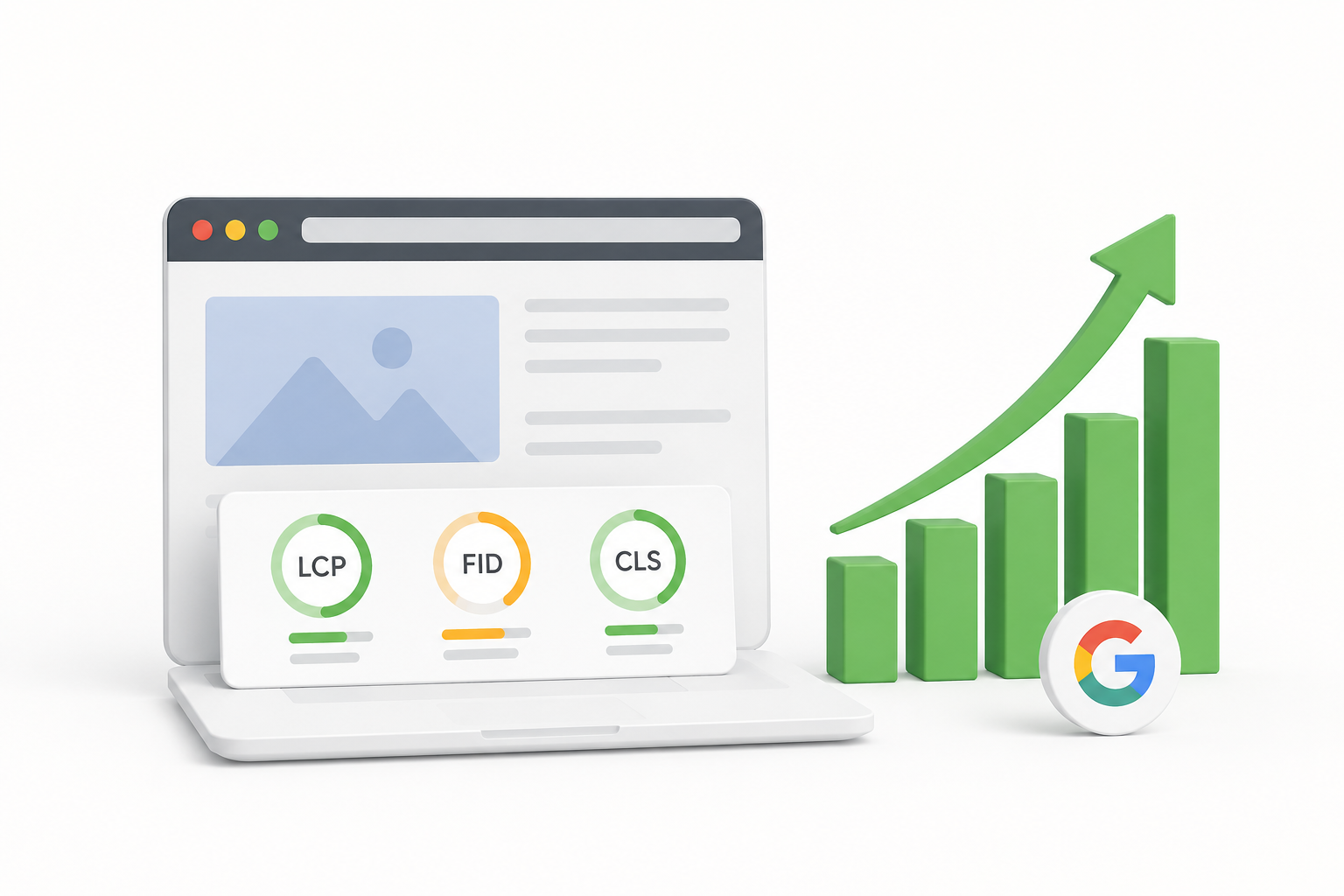
Core Web Vitals are three specific metrics Google uses to measure user experience:
1. Largest Contentful Paint (LCP) - Target: <2.5 seconds Measures how quickly the largest element on your page loads. This is usually a main image or headline.
2. First Input Delay (FID) / Interaction to Next Paint (INP) - Target: <100ms Measures how quickly your page responds when users interact with it (click a button, type in a field).
3. Cumulative Layout Shift (CLS) - Target: <0.1 Measures visual stability. It's the unexpected layout shifts that happen as the page loads.
Why Core Web Vitals Impact Rankings
Google confirmed that Core Web Vitals are direct ranking factors. But the impact goes beyond just rankings.
Pages with poor Core Web Vitals:
- Get filtered out of AI Overview consideration
- Have higher bounce rates
- Get lower engagement metrics
- Generate fewer conversions
- Lose authority to competitors
How to Improve Core Web Vitals
For LCP (Page Speed):
- Compress images aggressively (use WebP format)
- Lazy load below-the-fold images
- Minimize CSS and JavaScript
- Use a CDN (Content Delivery Network)
- Reduce server response time (TTFB)
- Remove render-blocking resources
For FID/INP (Interactivity):
- Minimize JavaScript execution time
- Break long JavaScript tasks into smaller chunks
- Reduce main thread work
- Optimize third-party scripts
- Defer non-critical JavaScript
For CLS (Visual Stability):
- Reserve space for images and ads
- Avoid inserting content above existing content
- Use transform instead of changing width/height
- Avoid animated fonts that load after content renders
- Be careful with pop-ups and notifications
Testing and Monitoring Tools
Google PageSpeed Insights - Start here. Get your current scores and specific recommendations.
GTmetrix - Detailed waterfall charts showing what's slowing your site.
WebPageTest - Advanced testing with video playback of page load.
Google Search Console - Monitor Core Web Vitals across your site and track improvements over time.
Regional Language SEO: A Game-Changing Opportunity
The Regional Language Boom
Here's a statistic that should get your attention: 80% of Indian internet users prefer content in their native language.
Yet only 20% of quality online content is available in regional languages.
This isn't a small market. Hindi alone has 340+ million internet users. Tamil has 76 million. Telugu has 75 million. Bengali, Marathi, Kannada, and other regional languages each have millions of users.
And here's the opportunity: Competition in regional language SEO is minimal compared to English SEO.
Ranking for "digital marketing agency" in English is brutally competitive. Ranking for the Hindi equivalent "डिजिटल मार्केटिंग एजेंसी" is significantly easier because fewer businesses are optimizing.
Which Languages Should You Target First?
Priority by speaker population and internet penetration:
Tier 1 (Must Target):
- Hindi: 342M+ speakers, 51% internet penetration
- Bengali: 264M speakers, 38% internet penetration
- English: 135M speakers, high internet penetration
Tier 2 (High Opportunity):
- Tamil: 76M speakers, growing digital adoption
- Telugu: 75M speakers, fast-growing tech ecosystem
- Marathi: 83M speakers, urban concentration
Tier 3 (Emerging):
- Kannada: 50M speakers
- Malayalam: 35M speakers
- Gujarati: 55M speakers
Start with Tier 1 languages if you have resources. Even one regional language multiplies your addressable market.
How to Implement Multilingual SEO
Don't Just Translate Localize
This is the most critical mistake: simply translating English content into regional languages.
Localization means:
- Using native writers who understand local culture
- Researching keywords specific to that region
- Adapting examples to local context
- Using local idioms and expressions
- Understanding regional search behavior
A Hindi translation of English content about "building a startup" might miss entirely because startup culture is different in India. The Hindi version needs to address Indian startup challenges, Indian funding sources, Indian regulatory issues.
Use Proper Technical Implementation
<!-- For separate domains (example.com and example.in/hi/) -->
<link rel="alternate" hreflang="en" href="https://example.com/page/" />
<link rel="alternate" hreflang="hi" href="https://example.com/hi/page/" />

<!-- For subdomains (en.example.com and hi.example.com) -->
<link rel="alternate" hreflang="en" href="https://en.example.com/page/" />
<link rel="alternate" hreflang="hi" href="https://hi.example.com/page/" />
Create Regional Keyword Clusters
Don't just translate one article. Create topic clusters around regional keywords:
- Pillar page covering main topic in regional language
- 8-12 cluster articles covering subtopics
- Internal linking between pillar and clusters
Hire Native Speakers
Hire writers from that region who understand local nuances. Machine translation followed by editing is not sufficient for competitive SEO.
E-E-A-T & Author Authority: Building Trust in 2026
What is E-E-A-T?
E-E-A-T stands for:
- Experience: Your real, first-hand experience with the topic
- Expertise: Demonstrated knowledge and skills
- Authoritativeness: Recognition as an expert in your field
- Trustworthiness: Accuracy, transparency, and security
Google and AI systems explicitly evaluate E-E-A-T when ranking content. The stronger your E-E-A-T signals, the higher you rank.
Why E-E-A-T Matters More Than Ever
Traditional ranking factors—backlinks, page speed, keyword optimization—still matter. But E-E-A-T is becoming the differentiator for highly competitive queries.
Think about it: If you search "latest SEO trends," you want information from someone who actually practices SEO, not just aggregates articles. Google's algorithm recognizes this preference.
E-E-A-T matters especially for:
- Any health, finance, or legal content (YMYL—Your Money or Your Life)
- Technical guides and tutorials
- Opinion pieces and analysis
- Industry trends and forecasts
How to Build E-E-A-T Signals
1. Create Detailed Author Bios
Every article needs:
- Author name and photo
- Professional credentials and certifications
- Years of experience
- Notable accomplishments
- Social media profiles
- Link to author page
Example author bio:
"Rajesh Kumar is a certified SEO professional with 8+ years of experience helping Indian businesses rank for competitive keywords. He's trained 500+ marketers through his online academy and has spoken at three major digital marketing conferences. Rajesh holds the Google Analytics certification and has published research on voice search trends."
2. Showcase Team Expertise
Display your team prominently:
- Individual team pages with credentials
- Case studies featuring specific team members
- Video testimonials with team members
- Bylines connecting authors to their work
- Team certifications and awards
3. Feature Real Case Studies
Case studies are the ultimate E-E-A-T signal:
- Real client name (anonymized only when necessary)
- Specific metrics and results
- Detailed process and challenges
- Client testimonial
4. Highlight Industry Certifications
- Google Analytics certification
- Google Ads certification
- HubSpot certification
- Proven track record
- Award nominations
5. Build Media Mentions and PR
PR mentions are credibility signals:
- Press releases about notable achievements
- Media interviews and quotes
- Industry publication features
- Speaking engagements at conferences
- Podcast appearances
6. Encourage Customer Reviews
Review signals build trust:
- Google Reviews for local businesses
- Trustpilot
- Industry-specific review platforms
- LinkedIn recommendations
- Case study testimonials
Local SEO for Tier 2 & Tier 3 Cities: Massive Opportunity
Why Local SEO Matters in 2026
Local SEO has evolved dramatically. It's no longer just about appearing in Google Maps. AI systems now aggregate information from multiple sources Google Maps, Yelp, social media, forums to build location-based answers.
For businesses in Tier 2 and Tier 3 cities, this creates opportunities because:
- Competition is significantly lower than in metros
- Local searchers have clear purchase intent
- Conversion rates from local searches are higher
- Growing smartphone penetration in smaller cities
Google Business Profile Optimization
Your Google Business Profile is the foundation of local search visibility.
Complete All Fields:
- Business name
- Category (most relevant)
- Address and service area
- Phone number
- Website
- Business hours
- 10+ high-quality photos
Photo Strategy:
- Business storefront/office
- Team photos
- Products/services in action
- Team at work
- Customer interactions
- Recent events
Regular Posts and Updates:
- Weekly or bi-weekly updates
- Event announcements
- Seasonal offers
- Blog post promotions
- New products or services
Q&A Management:
- Answer all customer questions
- Monitor daily
- Provide detailed, helpful answers
- Correct misinformation
Local Citation Building
Citations are online mentions of your business name, address, and phone number (NAP).
Top Indian Directories:
- JustDial (highest volume in India)
- Sulekha
- MapMyIndia
- 99acres
- IndiaMART (for B2B)
- Zomato (for restaurants)
- BookMyShow (for entertainment)
Consistency is Critical: Your NAP must be identical everywhere. Any variation (different address format, phone number variation) confuses search engines.
Audit all listings monthly for consistency.
City-Specific Content Strategy
Create City Landing Pages:
- Dedicated page for each city served
- City-specific keywords
- Local customer testimonials
- Local case studies
- Service customization for local context
Neighborhood/Area Pages:
- If you serve multiple neighborhoods in a city
- Micro-location targeting
- Local area landmarks
- Neighborhood-specific content
Local Link Building:
- Local chamber of commerce
- Local business associations
- Local news coverage
- Community event sponsorships
- Local charity partnerships
Structured Data and Rich Snippets: Making Content Extractable
What Is Structured Data and Why It Matters
Structured data is code that helps search engines understand your content. It's written in JSON-LD format (recommended by Google).
Example:
{
  "@context": "https://schema.org/",
  "@type": "Article",
  "headline": "Latest SEO Trends In India 2026",
  "datePublished": "2026-07-03",
  "author": {
    "@type": "Person",
    "name": "Rajesh Kumar"
  }
}
This code tells Google: "This is an article about SEO trends, published on July 3, 2026, written by Rajesh Kumar."
Most Important Schema Types for Your Site
1. Organization Schema Tells Google about your business:
- Company name, logo, contact info
- Social media profiles
- Address
- Phone number
2. FAQ Schema Optimizes your FAQ section for search:
- Question-answer pairs
- Eligible for rich snippets
- Increases click-through rates
3. Article/BlogPosting Schema Optimizes your blog posts:
- Headline, date published, date modified
- Author information
- Featured image
- Article body
4. LocalBusiness Schema If you have physical locations:
- Business name, address, phone
- Hours of operation
- Service area
- Reviews
5. Review/Rating Schema If you have customer reviews:
- Review text
- Star rating
- Author name
- Publication date
Implementation Guide
Using Google's Structured Data Helper:
- Go to https://www.google.com/webmasters/markup-helper/
- Choose your markup type
- Highlight relevant content
- Google generates the code
- Copy and paste into your page
Testing Your Markup:
- Use Google's Rich Results Test: https://search.google.com/test/rich-results
- Check for errors
- Monitor in Search Console for rich results eligibility
Content Strategy for 2026: Creating Content That Ranks
What Makes Content Rank in the AI Era?
In 2026, content ranking depends on four factors:
1. Comprehensiveness Cover the topic thoroughly. Don't leave major angles uncovered. AI systems prefer comprehensive resources over narrowly-focused pages.
Target: 4,500-6,000 words for competitive topics (shorter for niche topics).
2. Originality Unique research, personal experience, original data. AI systems can detect when you're just rewriting competitor content.
Include:
- Your own research and data
- Case studies with your clients
- Industry interviews
- Original frameworks or methodologies
3. User Satisfaction Signals How long do visitors stay on the page? How much do they scroll? Do they click internal links? These signals matter.
Optimize for:
- Scannable format (headers, bullets, short paragraphs)
- Visual elements (images, charts, videos)
- Clear navigation (internal links)
- Readable typography
4. Content Freshness AI systems prefer recent content. Update your top-performing articles every 6 months.
Mark update dates clearly. This signals that the content is fresh and reliable.
Frequently Asked Questions
How long does it take to rank for "Latest SEO Trends In India"?
Expect 3-6 months to reach page 1. With high-quality content, strong E-E-A-T signals, and consistent optimization, many sites reach the top 3 within 4-5 months.
Should I target English only or also regional languages?
Both. English targets metro cities and decision-makers who speak English. Regional languages target massive untapped markets. Start with English, add regional languages once you have baseline traffic.
How often should I update this article?
Update every 6 months minimum. Add new statistics, refresh outdated information, expand successful sections, update internal links as new articles publish.
Can I rank in AI Overviews without ranking in traditional search results?
Rarely. AI systems typically cite already-ranked pages. Focus on ranking in traditional search first. AI Overview visibility usually follows.
What's the relationship between voice search optimization and AI Overviews?
Both require similar optimization: clear answers, natural language, FAQ schema. Optimizing for one often helps with the other.
How do I know if my site is appearing in AI Overviews?
Test manually by searching your keywords in Google, ChatGPT, Perplexity, and Gemini. Also monitor Search Console for impression changes relative to clicks.
Is page speed more important than content quality?
Both are important, but content quality ranks higher. A slow page with exceptional content will eventually outrank a fast page with mediocre content. Optimize both.
Should I focus on backlinks or internal links?
Both. Backlinks build domain authority. Internal links distribute authority and help users/AI systems understand site structure. Focus on quality backlinks from high-authority sites first, then optimize internal linking.
What's the ideal word count for blog posts in 2026?
4,500-6,000 words for competitive topics. For less competitive niches, 2,000-3,000 words is often sufficient. Length matters less than comprehensiveness and quality.
How do I handle duplicate content across English and regional language versions?
Use hreflang tags to tell Google these are alternate versions of the same content in different languages. Each language version gets its own URL.
Conclusion: Your Action Plan for 2026 SEO Success
The SEO landscape in India has fundamentally shifted. Businesses that understand these trends AI Overviews, voice search, E-E-A-T signals, Core Web Vitals, and regional language opportunities have a massive competitive advantage.
The time to act is now. Your competitors are likely not yet implementing all these strategies. But when they do, the competition will intensify.
Advanced Strategy: Getting Professional Help
Implementing all these strategies simultaneously is challenging. Many businesses benefit from working with a digital marketing agency that specializes in AI-driven SEO.
Our process includes:
- Comprehensive SEO Audit - Identify gaps in your current strategy
- AI Overview Optimization - Get your site cited in AI Overviews
- Voice Search Strategy - Capture voice-search traffic
- Regional Language Expansion - Unlock new markets
- Technical SEO Implementation - Master Core Web Vitals
- E-E-A-T Building - Establish your authority
Book a free consultation to discuss your SEO strategy.
Ready to Grow Your Business with SEO?
Whether you're looking to rank higher on Google, generate more qualified leads, or increase organic traffic, our SEO experts are here to help. Get started with a free consultation today.

.png)